
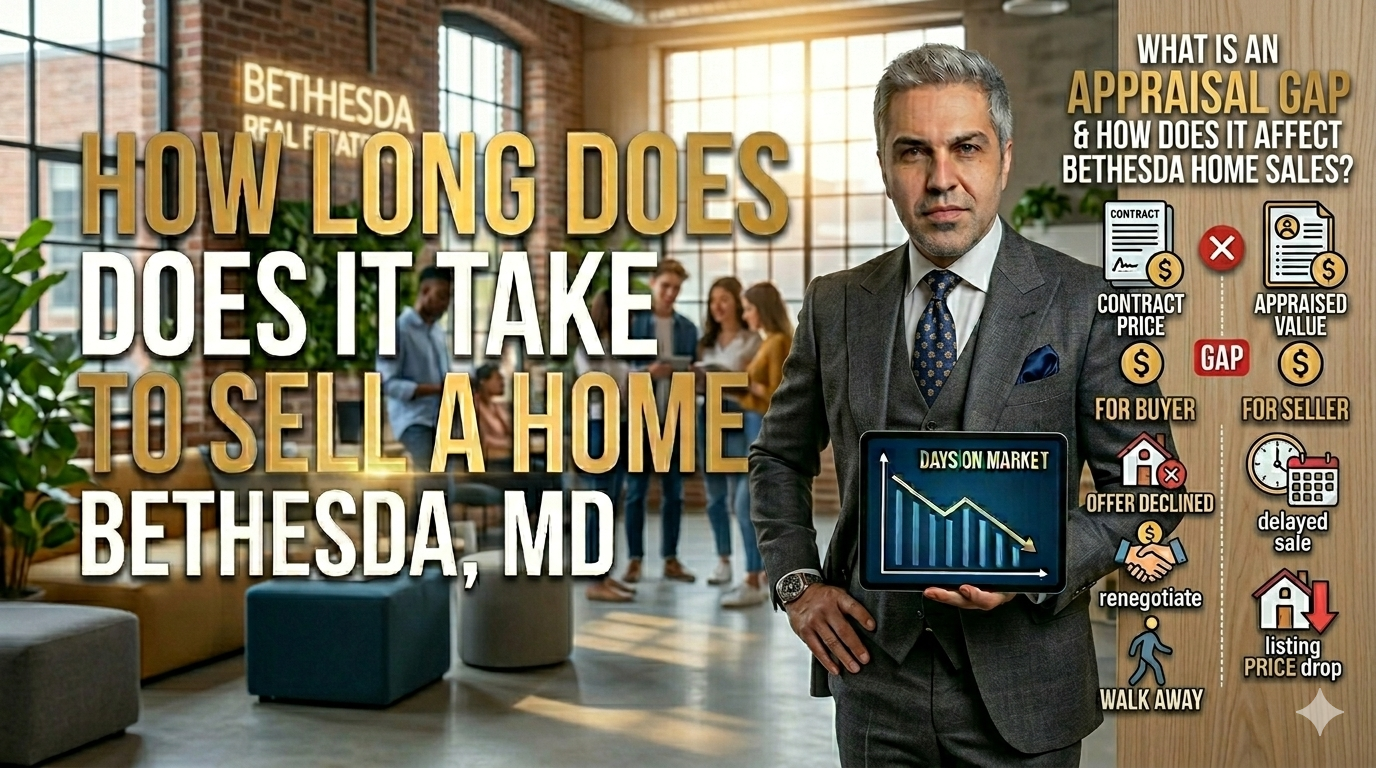
In Bethesda’s real estate market, buyers and sellers may encounter a term known as an appraisal gap. This concept can influence negotiations, financing, and whether a transaction moves forward smoothly.
Understanding how appraisal gaps work can help both buyers and sellers navigate the process more effectively.
What Is an Appraisal Gap?
An appraisal gap occurs when a home’s appraised value is lower than the agreed purchase price.
Example:
- Contract price: $1,200,000
- Appraised value: $1,150,000
- Appraisal gap: $50,000
Because lenders typically base financing on the appraised value rather than the contract price, this difference must be addressed before closing.
Why Appraisal Gaps Happen in Bethesda
Appraisal gaps can occur for several reasons, particularly in competitive markets.
Common factors include:
- Multiple offers driving the price above recent comparable sales
- Limited recent sales data in certain neighborhoods
- Rapid market changes
- Unique property features that are difficult to value
In Bethesda, where some homes sell quickly and at premium prices, appraisal gaps are not uncommon in competitive situations.
How Appraisal Gaps Affect Buyers
When an appraisal comes in low, buyers may need to decide how to proceed.
Options may include:
- Paying the difference in cash
- Renegotiating the purchase price
- Requesting seller concessions
- Canceling the contract if contingencies allow
The ability to cover an appraisal gap often depends on a buyer’s available funds and financing structure.
How Appraisal Gaps Affect Sellers
For sellers, a low appraisal can impact the final sale outcome.
Possible outcomes include:
- Accepting a lower price
- Negotiating a compromise with the buyer
- Relisting the property if the contract falls through
Even in strong markets, appraisal results can influence how transactions move forward.
Appraisal Gap Coverage
In competitive markets, some buyers include appraisal gap coverage in their offers.
This means the buyer agrees in advance to pay a certain amount above the appraised value if needed.
Example:
A buyer may agree to cover up to $25,000 of any appraisal gap.
This type of clause can make an offer more attractive to sellers.
Market Conditions Matter
The frequency of appraisal gaps often depends on market conditions.
In highly competitive markets with limited inventory:
- Buyers may offer above asking price
- Appraisal gaps may occur more often
In slower markets:
- Prices may align more closely with appraised values
- Appraisal gaps may be less common
Final Thoughts
Appraisal gaps are a normal part of real estate transactions, especially in competitive markets like Bethesda.
Both buyers and sellers benefit from understanding how appraisals work and how to respond if a gap occurs.
Clear expectations and preparation can help reduce uncertainty during the transaction process.
Legal Disclaimer
This article is for informational purposes only and should not be considered financial, legal, or lending advice. Real estate transactions involve multiple variables, and individuals should consult qualified professionals before making decisions.
Check out this article next