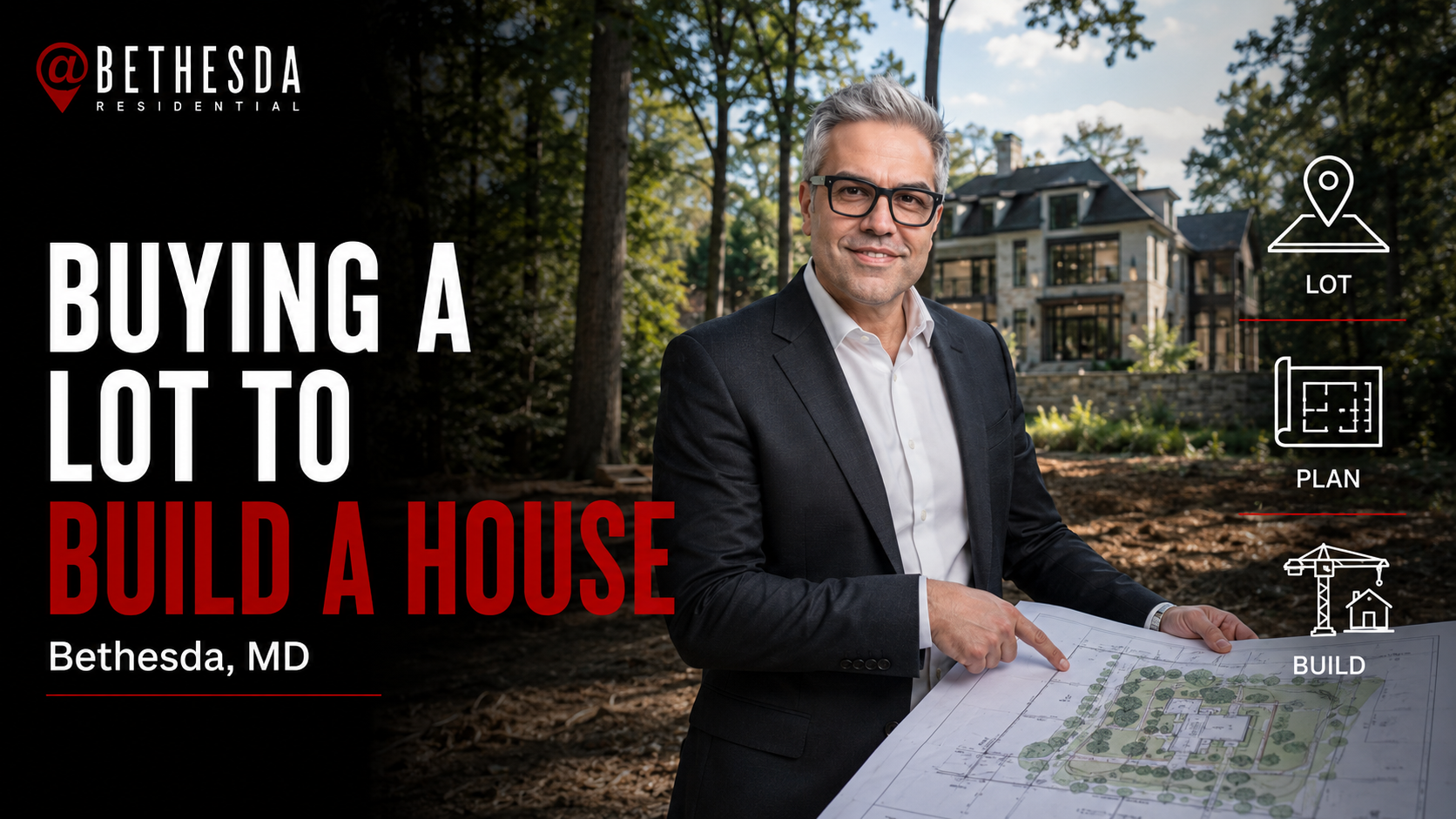
Buying a lot to build a house in Bethesda or Potomac typically means $850K–$1.2M+ for a teardown lot plus $200–$500 per square foot to build, pushing most custom projects to $1.5M–$2M+ all in. You’ll finance it with a construction-to-permanent ("one-time close") loan, budget 12–18 months start to finish, and clear Montgomery County permitting — including possible forest conservation review — before you break ground.
Quick Answer
Buying a lot to build a house in Bethesda or Potomac typically means $850K–$1.2M+ for a teardown lot plus $200–$500 per square foot to build, pushing most custom projects to $1.5M–$2M+ all in. You’ll finance it with a construction-to-permanent ("one-time close") loan, budget 12–18 months start to finish, and clear Montgomery County permitting — including possible forest conservation review — before you break ground.
If you love a Bethesda street but not a single house on it, buying a lot to build a house is the path that gets you exactly what you want. It's also one of the most involved transactions in this market — part land purchase, part construction project, part financing puzzle. Here's how the process actually works in Bethesda, Potomac, and the rest of Montgomery County, what it costs, and where buyers most often get tripped up.
This question comes up constantly right now. Inventory of the "right" home in Bethesda and Potomac is thin, teardown activity is high, and buyers with a clear vision are increasingly choosing to build rather than compromise. If that's you, the numbers and the timeline below are the reality check to start with.
What Buying a Lot to Build a House in Bethesda Actually Costs
The land is the first number, and in lower Montgomery County it's a big one. A teardown lot inside Bethesda commonly runs $850,000 to $1.2 million or more. Established parts of Potomac trade closer to $400,000 to $600,000+ for a half-acre to a full acre, and buildable lots elsewhere in the county start around $250,000 and climb from there based on location and size.
Then you build. A useful rule of thumb for construction in this area is:
- $200–$350 per square foot for a solid custom build
- $500+ per square foot for premium finishes in Bethesda and Potomac
- $50,000–$200,000 for site prep — clearing, grading, and utility connections
- $60,000+ in county impact fees on a typical new home, plus permitting and land-development costs that often add another $100,000+
Put it together and a realistic Bethesda custom build pencils out near $2 million all-in — for example, a $900,000 lot, roughly $185,000 in land development and permits, and about $935,000 in construction. That's why building from a lot is usually a move for buyers targeting the $1.5M–$2M+ finished-home range, not a shortcut to a cheaper house. If your goal is simply a lower price per square foot, an existing home almost always wins.
How the Financing Works
You can't use a standard 30-year mortgage to buy raw land and build. What you want is a construction-to-permanent loan — often called a "one-time close." It bundles the lot purchase and the construction draws into a single loan that converts to a permanent mortgage once the home is finished. One closing, one set of costs, and you avoid re-qualifying midway through the project.
A few things that matter locally:
- If you already own the lot, most lenders will let your lot equity count toward your down payment.
- Lenders release funds in draws tied to construction milestones, and they'll want a fixed-price builder contract and detailed plans before they commit.
- Rates and terms on construction loans differ from conventional mortgages, so this is a conversation to have with a lender who does these regularly before you fall in love with a lot.
Because you're financing a build rather than an existing home, appraisal and reserve requirements are stricter. Budget more cash and more lead time than a normal purchase.
The Approvals: Permits, Trees, and Timeline
This is where Montgomery County builds in real time. A building permit review runs 8 to 12 weeks minimum, and longer if your project triggers additional review for stormwater management, forest conservation, or historic district compliance.
Two local rules to know before you buy any lot:
- Forest Conservation Law. Montgomery County's Forest Conservation Law — updated most recently in December 2025 — aims for no net loss of forest countywide. It generally applies to larger parcels and development applications, so a bigger Potomac lot or one with significant tree cover can trigger a forest conservation plan and replanting or fee obligations. Smaller lots often fall below the threshold, but you verify this per parcel, not by assumption.
- Tree and clearing rules. The county separately regulates removal of large and roadside trees. What you're allowed to clear affects both your buildable footprint and your budget.
From land settlement to move-in, plan on 9 to 12 months of construction on top of the design and permitting phase. Realistically, most Bethesda-area build projects run 12 to 18 months start to finish once you account for architectural plans, county review, and weather delays. If you need to be in a home by a hard deadline — a school-year start, a lease ending, the sale of your current house — that timeline is the single biggest reason people decide to buy existing instead. Building where you'll also be carrying rent or a current mortgage during construction makes the cash-flow math matter even more.
What to Check Before You Buy the Lot
Not every lot that looks buildable is buildable — or buildable at the price you're imagining. Before you go under contract, get answers on:
- Utilities. Is the lot on public water and sewer, or will you need a well and septic system? Many Potomac and outer-county parcels are on well and septic, which changes your cost, your build, and your due diligence.
- Survey and setbacks. A current property survey tells you the exact boundaries, easements, and how much of the lot you can actually build on after setbacks.
- Zoning and lot coverage. Zoning dictates the size and height of what you can build. A large lot with restrictive coverage limits may not fit the house you're picturing.
- Soil, slope, and drainage. These drive site-prep cost and can force expensive engineering.
Whenever possible, make your lot purchase contingent on confirming you can build the home you want — feasibility, permits, and financing. That contingency is your protection against buying an expensive problem.
Buying a Lot to Build vs. Buying New Construction
If a custom build feels like a lot, it is. The alternative is buying new construction in Bethesda from a builder who already owns the lot and handles the permits, financing, and construction risk. You give up some control over the design, but you get a fixed price, a shorter timeline, and far less to manage.
Buying a lot to build a house makes the most sense when you have a specific vision, a specific location, and the time and cash reserves to see a 12-to-18-month project through. If any of those three is shaky, an existing home or a builder's finished product is usually the smarter play.
One more line item people forget: once your new home is assessed, Montgomery County issues a supplemental tax bill on new construction reflecting the finished value. And at settlement on the land, you'll owe Maryland transfer and recordation taxes just like any other purchase. Build both into your budget from day one.
The Bottom Line
Buying a lot to build a house in Bethesda or Potomac is the surest way to get exactly the home you want — but it's a $1.5M–$2M+ decision with a year-plus timeline, specialized financing, and a real approvals process. The buyers who do it well line up their lender, their builder, and their due diligence before they sign on the lot.
If you're weighing a build against buying existing, I'm happy to walk you through the numbers for a specific lot or neighborhood — including what it'll realistically cost and how long it'll take. Reach out anytime.
About Pey Behin
Pey Behin is a residential real estate agent serving the Washington, DC metro area, with a focus on Bethesda, Montgomery County, and Northern Virginia. He works with buyers and sellers who want clear strategy, data-driven pricing, and direct guidance throughout the transaction process.