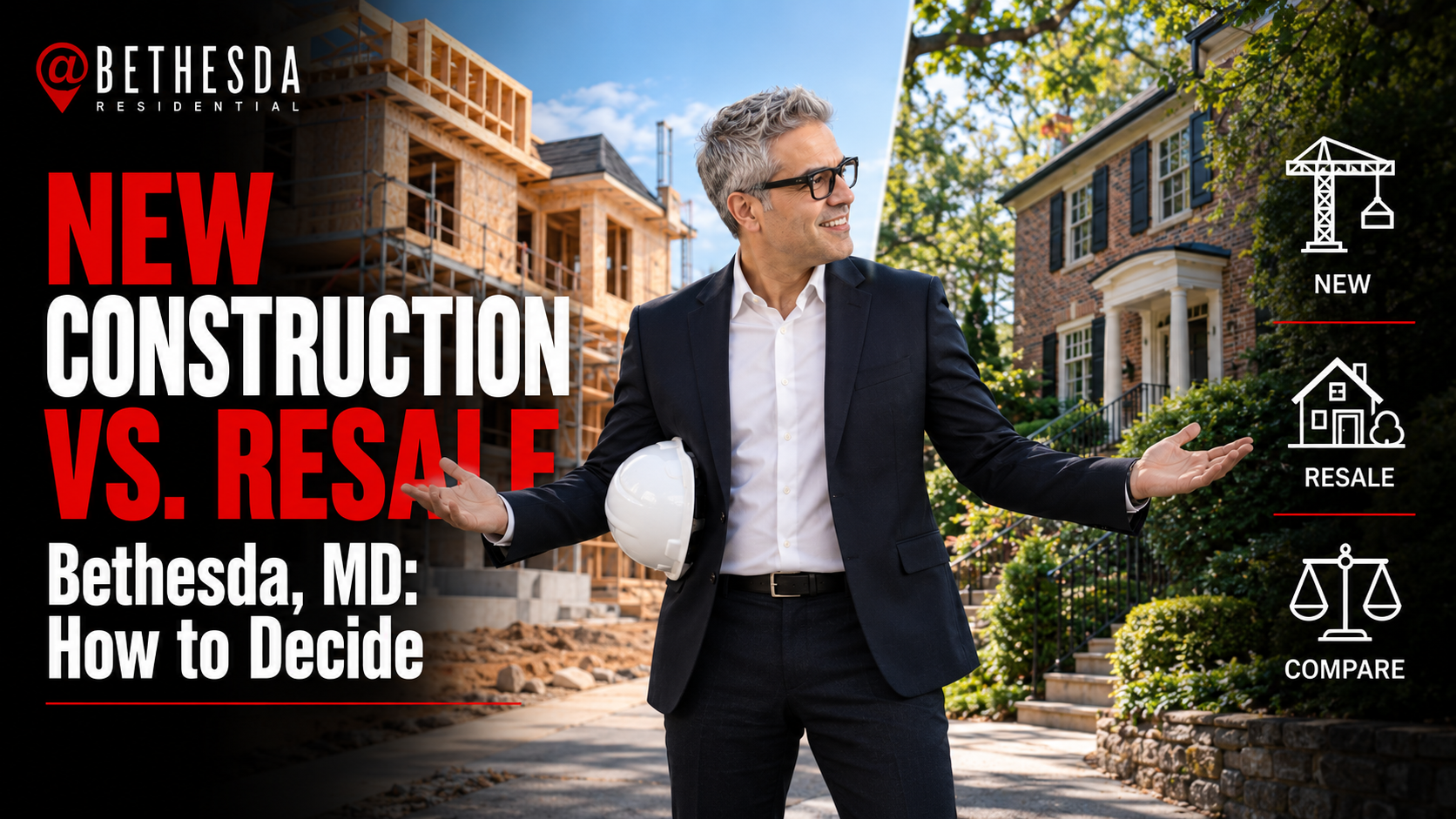
New construction vs. resale in Bethesda usually comes down to a brand-new teardown-rebuild against an established home. New construction offers modern systems, current layouts, and a builder warranty, but carries a price premium and can trigger a supplemental tax bill. Resale wins on established location, larger lots, character, price, and negotiating room, with the trade-off of older systems. Unlike the national trend where builder incentives have narrowed the gap, Bethesda's infill market keeps new construction at a premium — and resale is where most of the inventory and leverage sit.
Quick Answer
New construction vs. resale in Bethesda usually comes down to a brand-new teardown-rebuild against an established home. New construction offers modern systems, current layouts, and a builder warranty, but carries a price premium and can trigger a supplemental tax bill. Resale wins on established location, larger lots, character, price, and negotiating room, with the trade-off of older systems. Unlike the national trend where builder incentives have narrowed the gap, Bethesda's infill market keeps new construction at a premium — and resale is where most of the inventory and leverage sit.
In most of the country, choosing new construction means picking a lot in a subdivision and a model from a builder's brochure. In Bethesda, it usually means something different: a brand-new home built where an older one was torn down, standing on the same block as houses from the 1950s. So the real question here isn't "subdivision or resale" — it's whether you want the newest house on the street or an established one with room to negotiate.
Both can be the right call. It comes down to what you value, your timeline, and how the local market shifts the math. Here's how to think it through.
What You Actually Get With New Construction
A new home in Bethesda is almost always move-in ready and built to current codes. That buys you real advantages:
- Modern systems and efficiency — new roof, HVAC, wiring, plumbing, insulation, and windows, which usually means lower utility bills and years before anything major needs replacing.
- Open, current layouts — the wide kitchens, primary suites, and mudrooms today's buyers want, without a renovation.
- A builder warranty — new homes come with coverage that resale homes don't. What's included and for how long varies, so read it closely; I cover the details in my guide to the new construction builder warranty in Maryland.
- Low near-term maintenance — fewer surprise repairs in the first several years.
The trade-offs are just as real. New construction in Bethesda typically carries a price premium because the builder had to buy and tear down an existing house first — the land is the expensive part. Lots on infill rebuilds are often regraded and the landscaping is young. If you're buying pre-construction, expect a longer timeline and decisions to make along the way. And there's a tax surprise many buyers miss: a mid-year reassessment can trigger a supplemental tax bill on new construction once the finished home is valued. Builder reputation matters too, and price and incentives are more negotiable than people assume — see how to negotiate new construction price and builder incentives.
Where Resale Homes Win
Resale is the bulk of what's for sale in Bethesda, and for good reason:
- Established location and lots — older Bethesda, Chevy Chase, and Potomac neighborhoods are already built out, with mature trees and, often, larger lots than a new infill parcel.
- Character — architecture and craftsmanship you can't always replicate in a spec build.
- Price and negotiating room — resale generally costs less per square foot than a comparable new build here, and there's usually more room to negotiate on price, repairs, and terms.
- Speed — you can typically close and move in far faster than waiting on construction.
The catch is age. Older systems may be near the end of their life, layouts can feel dated, and the inspection is where you find out what you're really buying. That's not a dealbreaker — it's a negotiating point — but you should budget for updates and go in with a clear-eyed inspection. New construction shifts the risk: instead of an inspection full of aging systems, your homework is the builder's track record, the contract, and the finishes. If you're new to the process, my guide on what to know before buying new construction in Bethesda walks through what to check.
New Construction vs. Resale in Bethesda: How the Local Market Tilts It
You may have seen headlines that new homes are now as cheap as, or cheaper than, existing ones — nationally, the long-standing new-home price premium has compressed, and builders have leaned hard on incentives and smaller floor plans. That's true for large production builders on the suburban fringe. It mostly doesn't describe Bethesda.
Here, new construction is custom and infill, not mass-produced. A builder pays a premium for a teardown lot in a desirable area, so the finished home lists at a premium too — and production-builder incentives are rare because there aren't many production builders working inside the Beltway. That's the key to weighing new construction vs. resale in Bethesda: the national "new is cheaper" story doesn't hold, and the resale side is where most of the inventory and negotiating leverage actually sits.
It also explains why so many blocks are a patchwork of old and new. In a lot of Bethesda, the land is worth more than the house sitting on it, which is exactly why teardowns happen. When you compare the two here, you're really weighing a premium for brand-new against the value — and negotiating room — in an established home on a lot that may be its own asset.
A simplified example makes it concrete. An older, dated home on a sought-after Bethesda lot might sell in the low-to-mid seven figures. A builder buys it, tears it down, and puts up a large custom home that lists well above what the original house ever would have — because you're now paying for that land plus a brand-new, high-end house on top of it. The resale buyer down the block is paying less and inheriting an older house; the new-construction buyer is paying more for a turnkey one. Neither is "wrong" — but knowing which side of that trade you're on is the whole point.
How to Decide
Run your choice through a few honest questions:
- Timeline: Do you need to move now, or can you wait months for a build?
- Appetite for projects: Do you want everything done, or are you comfortable updating over time?
- What matters most: Newness and low maintenance, or location, lot size, and character?
- Where your money goes: Are you paying a premium for new, or buying negotiating room and a bigger lot with resale?
- Resale value: Which choice holds up better when it's your turn to sell in that specific neighborhood?
There's no universal winner — there's the right answer for your situation. One more factor worth weighing: how long you plan to stay. If this is a long-term home, paying up for new construction you'll enjoy for fifteen years can make sense; if it's more of a five-year move, the resale that let you keep cash and buy in an established location may protect your equity better when you sell. The answer changes block by block here.
The way I help buyers settle it is by running real comparisons: recent sales for both new and resale in the neighborhoods you're targeting, a hard look at the builder and contract on any new build, and an honest read on whether a resale's lot or location is worth more than its dated kitchen. That's also where I flag when a "premium" new build is actually priced fairly for the block, or when a resale is a teardown lot in disguise.
If you're trying to decide between new construction vs. resale in Bethesda for your own search, reach out — I'm happy to pull the numbers for the specific streets you're considering and help you weigh it without the sales pitch.
About Pey Behin
Pey Behin is a residential real estate agent serving the Washington, DC metro area, with a focus on Bethesda, Montgomery County, and Northern Virginia. He works with buyers and sellers who want clear strategy, data-driven pricing, and direct guidance throughout the transaction process.