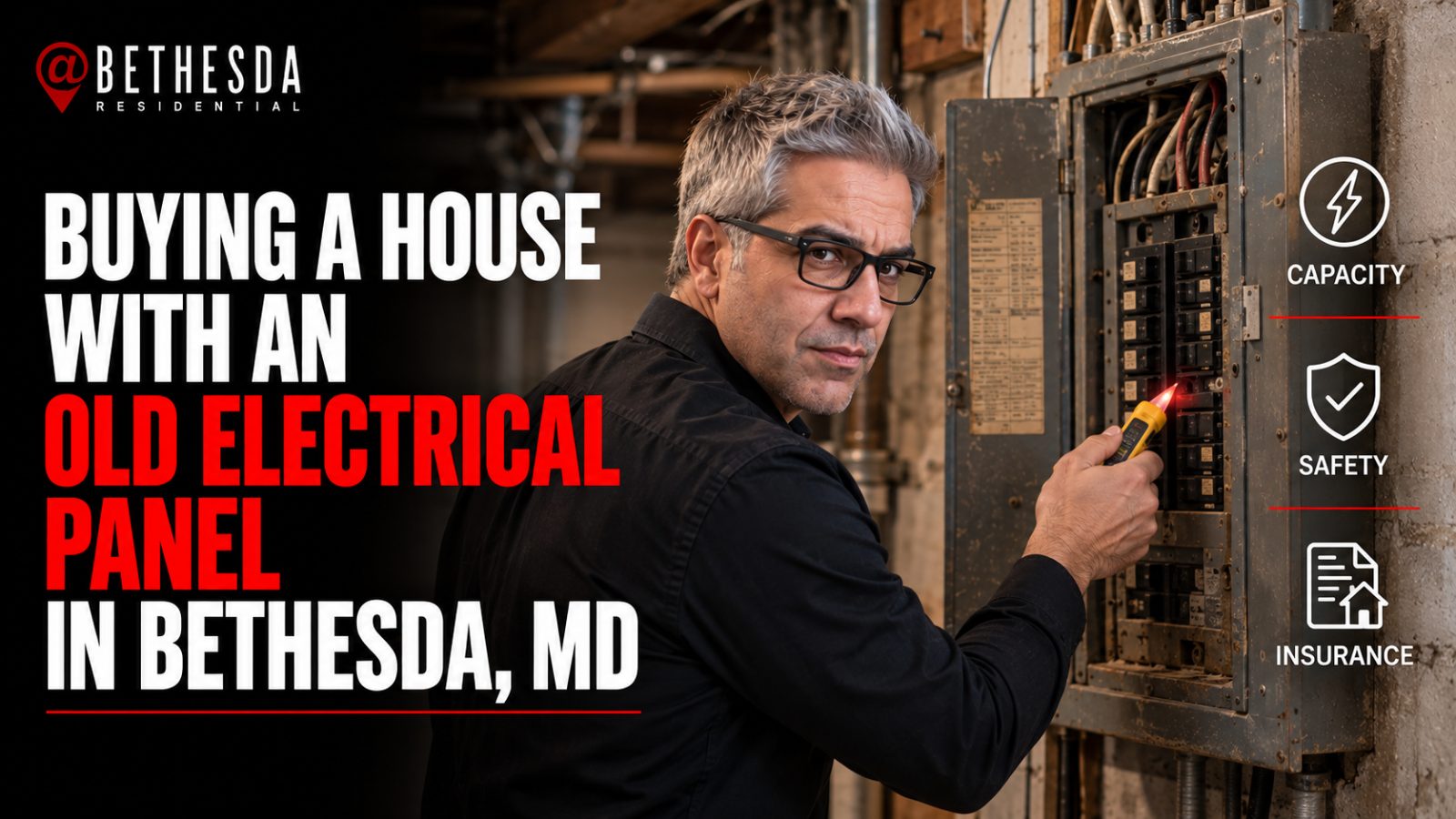
An old electrical panel in a Bethesda home isn't an automatic deal-breaker, but it's one of the few inspection findings that can stall your financing and your insurance at the same time. Hazardous brands like Federal Pacific Stab-Lok and Zinsco — common in Montgomery County homes built from the 1950s through the 1980s — can lead an insurer to refuse a policy or an FHA or VA appraiser to require replacement before closing. Replacing a hazardous panel typically runs about $1,500 to $4,000, or $3,500 to $7,500 for a full 200-amp service upgrade with a Montgomery County permit. Price the fix, confirm you can insure the home early, and negotiate a seller credit or repair before you remove your inspection contingency.
Quick Answer
An old electrical panel in a Bethesda home isn't an automatic deal-breaker, but it's one of the few inspection findings that can stall your financing and your insurance at the same time. Hazardous brands like Federal Pacific Stab-Lok and Zinsco — common in Montgomery County homes built from the 1950s through the 1980s — can lead an insurer to refuse a policy or an FHA or VA appraiser to require replacement before closing. Replacing a hazardous panel typically runs about $1,500 to $4,000, or $3,500 to $7,500 for a full 200-amp service upgrade with a Montgomery County permit. Price the fix, confirm you can insure the home early, and negotiate a seller credit or repair before you remove your inspection contingency.
You found the house. The layout works, the location is right, and then the inspector pops the cover off a scorched-looking metal box in the basement and says the words that make every buyer's stomach drop: "You'll want an electrician to look at this panel." Buying a house with an old electrical panel is one of those findings that sounds minor and turns out to matter more than almost anything else on the report — because it can quietly complicate your financing and your insurance at the same time.
Here's the good news and the catch. An aging panel is almost always fixable, and it's rarely a reason to walk on its own. But a few specific panels are treated as genuine fire hazards, and in those cases your lender, your appraiser, and your insurance carrier may force the issue before you ever get the keys. Knowing which camp your panel falls into — and what it costs to fix in Montgomery County — is what keeps a surprise in the basement from becoming a dead deal.
What to check before buying a house with an old electrical panel
When you're buying a house with an old electrical panel, the first question isn't "how old" — it's "which brand." Two names should put you on alert:
- Federal Pacific Electric (FPE) "Stab-Lok" panels. Installed from roughly the 1950s through the 1980s, these are infamous because the breakers can fail to trip during an overload — the one job a breaker exists to do. When a breaker doesn't trip, the wiring overheats and the panel becomes a fire risk. Independent testing has reported failure rates high enough that most inspectors flag an FPE panel on sight. You'll usually spot "Stab-Lok" or "Federal Pacific" printed inside the door, often with thin breakers marked by a small red stripe.
- Zinsco panels (also sold as Sylvania or GTE-Sylvania). These have a different flaw — the bus bar the breakers clip into can corrode and overheat, and a breaker can effectively melt in place and stop protecting its circuit. Look for colorful breaker handles — red, blue, yellow — and the Zinsco or Sylvania name.
A few other setups raise the same questions, even though they aren't "defective" by design:
- Fuse boxes instead of circuit breakers — common in homes that haven't been updated since the mid-century.
- 60-amp or 100-amp service in a home where you plan to add an EV charger, a heat pump, an induction range, or a finished basement. The oldest sections of Bethesda and Chevy Chase still have 60-amp service, and plenty of mid-century houses in Kensington, Garrett Park, and North Bethesda sit at 100 amps.
- "Split-bus" panels with no single main shut-off, and obscure brands like Pushmatic where replacement parts are no longer made.
A standard home inspection will usually catch these, but an inspector's job is to flag, not diagnose. If the panel is on the list above, the right next move is a licensed electrician's evaluation while your inspection contingency is still in place.
Why insurers and lenders care about Federal Pacific and Zinsco panels
This is where an old panel stops being a repair line item and starts being a transaction problem.
Insurance comes first. Many carriers won't write a new homeowners policy on a house with a Federal Pacific or Zinsco panel — and a Zinsco in particular is close to an automatic decline with some companies. Others will insure the home but attach a condition: replace the panel within 30 to 60 days or the policy gets canceled. Because your lender requires an active insurance binder at closing, a carrier's "no" can stop the deal cold even when everything else is in order. It's worth understanding how homeowners insurance in Bethesda gets priced and approved before you're up against a closing date.
Then the appraisal. If you're using an FHA or VA loan, the appraiser confirms the electrical system is safe, functional, and adequate — a visual look, not a full inspection. A visibly hazardous panel, exposed wiring, or a known problem brand can trigger a required repair, and that repair has to be completed before closing. Not every appraiser catches an FPE panel, but if yours does, it becomes a condition of the loan, not a suggestion.
The pattern mirrors other older-home findings. It's the same reason aluminum branch wiring can complicate a purchase: the house is perfectly livable, but the paperwork around it is what forces your hand.
What it costs to fix in Montgomery County — and who pays
The fix itself is usually straightforward. The price range is wide because it depends on whether you're swapping the panel or upgrading the entire service:
- Replacing a hazardous panel (FPE, Zinsco, or an old fuse box) with a modern breaker panel at the same amperage: roughly $1,500 to $4,000.
- Upgrading from 100-amp to 200-amp service: generally $1,500 to $3,000 nationally, but in the Bethesda market a full 200-amp service upgrade commonly runs $3,500 to $7,500 once you include the county permit, the inspection, and coordinating the meter pull with Pepco.
- If the utility's service line to the house also needs upgrading, the number climbs from there.
Three things are specific to Montgomery County and worth building into your plan:
- The work needs a DPS permit. Because Bethesda is unincorporated, a panel or service replacement is permitted and inspected through the Montgomery County Department of Permitting Services, and it should be done by a licensed electrician.
- Pepco has to be scheduled. A service upgrade means the utility pulls the meter and reconnects it — a good contractor builds that into a same-day cutover so the house isn't left without power.
- Keep the paperwork. If your insurer required the replacement, they'll want proof: a paid invoice from a licensed electrician plus the county's final inspection. Save both.
How to handle it in your offer
Once you know the panel is a problem, you have more leverage than it feels like — because the seller's next buyer will hit the same wall with their own lender and insurer. Your realistic options:
- Ask the seller to replace the panel before closing, using a licensed electrician and a pulled permit. This is cleanest when insurance is the sticking point, because you close with a panel your carrier will actually cover.
- Negotiate a closing credit and handle the replacement yourself after closing. This gives you control over the contractor and timeline — just confirm your insurer will bind a policy in the meantime, since some won't.
- Walk away — the right call only if the seller refuses to do either and the house has other serious issues stacked on top.
The move that protects you is sequencing. Confirm you can actually insure the home before you release your inspection contingency, get the electrician's written estimate in hand, and treat the panel the way you'd treat any safety item when you negotiate after the inspection. An old panel almost never has to kill a good deal — it just has to be handled before you're committed, not after.
A rusty old box in a Bethesda basement looks scarier than it usually is. The brand, the amperage, and your insurer's answer are what actually decide how big a deal it becomes, and all three can be sorted out during your inspection window if you move on them early. If you're weighing an offer on a home with a questionable panel and want help pricing the fix and structuring the ask, I'm happy to walk through it with you.
About Pey Behin
Pey Behin is a residential real estate agent serving the Washington, DC metro area, with a focus on Bethesda, Montgomery County, and Northern Virginia. He works with buyers and sellers who want clear strategy, data-driven pricing, and direct guidance throughout the transaction process.