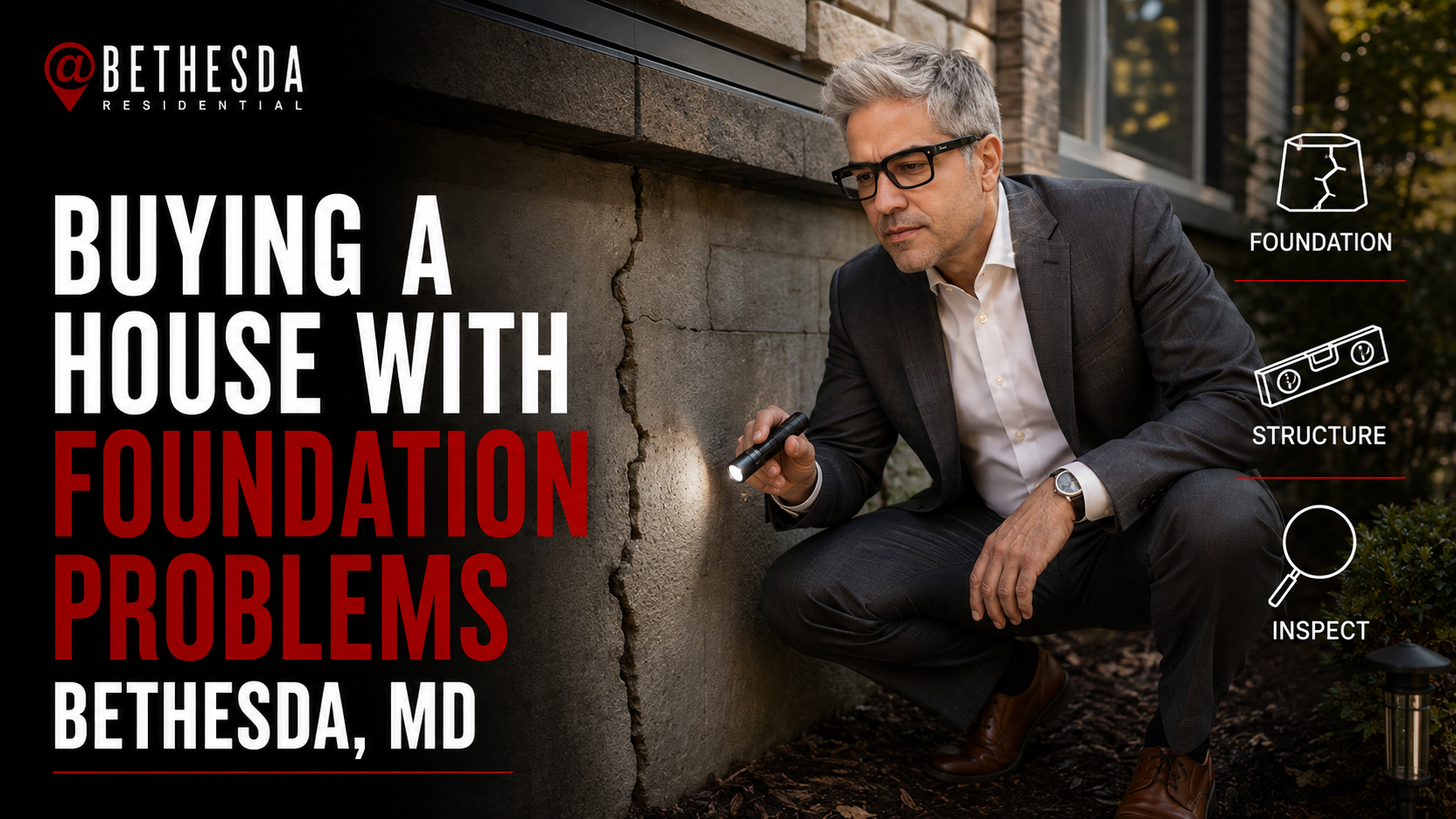
Buying a house with foundation problems isn't automatically a dealbreaker — but you need a licensed structural engineer, not just a home inspector, to tell whether a crack is cosmetic or structural. In Maryland, repairs range from a few hundred dollars for minor cracks to $40,000+ for piering or underpinning, roughly 12% above the national average. Many Bethesda homes date to the 1950s–60s, so settlement cracks are common — use your inspection contingency to get engineer estimates, then negotiate a price cut or repair credit, or walk away if the fix tops about 10% of the home's value.
Quick Answer
Buying a house with foundation problems isn't automatically a dealbreaker — but you need a licensed structural engineer, not just a home inspector, to tell whether a crack is cosmetic or structural. In Maryland, repairs range from a few hundred dollars for minor cracks to $40,000+ for piering or underpinning, roughly 12% above the national average. Many Bethesda homes date to the 1950s–60s, so settlement cracks are common — use your inspection contingency to get engineer estimates, then negotiate a price cut or repair credit, or walk away if the fix tops about 10% of the home's value.
Foundation cracks scare buyers more than almost anything else that shows up in an inspection report — and in Bethesda, where a lot of the housing stock was built in the 1950s and 1960s, they show up often. The good news: buying a house with foundation problems isn't automatically a mistake. Some cracks are cosmetic settlement that thousands of homes live with for decades. Others signal a five-figure repair and a shrinking pool of future buyers. The difference is what you need to figure out before your inspection contingency runs out.
Here's how to think about it the way I walk my clients through it — what to look for, who to call, what repairs actually cost around here, and when the smart move is to walk.
Is buying a house with foundation problems a dealbreaker?
Not by itself. A foundation issue is a negotiation point, not a verdict. What matters is the type and severity of the problem, the cost to fix it relative to the home's price, and whether your lender will fund the deal as-is.
Foundation problems fall on a wide spectrum:
- Cosmetic: thin vertical hairline cracks in poured concrete, or a bit of chalky efflorescence. Common in older homes, often just normal curing and settlement.
- Moderate: horizontal cracks, stair-step cracks in block or brick, doors and windows that stick, or floors that slope noticeably. These need a professional opinion before you go further.
- Serious: bowing or bulging walls, large horizontal displacement, active water intrusion, or evidence of failed prior repairs. This is where costs and risk climb fast.
On your own walkthrough, you can spot the early warning signs without any special tools: diagonal cracks radiating from the corners of windows and doors, gaps where the trim meets the wall, a basement floor that isn't level, or fresh paint and patching in just one corner of an unfinished basement. None of these confirm a problem on their own — but any of them is a reason to slow down and get a real evaluation.
Unrepaired foundation problems can knock 10 to 25 percent off a home's value, so a genuine issue changes what the house is actually worth — which is exactly why it belongs in your price conversation, not just your worry list.
Home inspector vs. structural engineer: who to call
Your general home inspector is the first line. They'll flag cracks, settlement, moisture, and uneven floors — but a home inspector is a generalist. When something looks structural, they'll recommend you bring in a specialist, and you should take that seriously rather than hoping it's nothing.
A licensed structural engineer is the person who can actually tell you whether a crack is cosmetic or a sign of failure. They understand the load path through the house — how the foundation, framing, and walls carry weight together — and when they finish, they stamp the report. That stamped report carries far more weight in a negotiation than a line item in a general inspection, and it gives you a defined repair scope you can collect real bids against.
Expect to pay roughly $300 to $800 for a structural engineer's evaluation in the Bethesda area, sometimes more for a detailed written report. On a home in Bethesda's price range — the median sits around $1,275,000 — that's cheap insurance against a five-figure surprise. Order it early. Maryland inspection contingencies typically run 7 to 14 days from contract acceptance, and you want the engineer's findings in hand while you still have the leverage of an open inspection contingency.
What foundation repairs cost in the Bethesda area
Repair costs swing enormously with severity. Here's the realistic range:
- Minor crack sealing: a few hundred dollars.
- Waterproofing and drainage corrections: $2,000–$7,000.
- Piering, underpinning, or wall stabilization: $10,000–$40,000 or more.
Foundation repair runs roughly $3 to $11 per square foot, and Maryland costs sit about 12 percent above the national average. The regional wildcard is soil — the DC metro has pockets of expansive clay that swell and shrink with moisture, and that movement is a common driver of settlement in older homes. A good engineer will tell you whether you're looking at a one-time fix or an ongoing condition, and that single distinction should shape your entire decision.
There's a cost angle buyers routinely forget: financing. For conventional, FHA, VA, and USDA loans, visible structural defects often have to be repaired before closing or the funds escrowed. If the seller won't repair and you can't structure an escrow, the loan itself can stall — so buying a house with foundation problems is as much a financing question as a repair one. Loop your lender in the moment the engineer's report lands.
Negotiating — or walking away
Once you have an engineer's report and at least two contractor bids, you have real options. In Maryland, the most common paths are a price reduction equal to the repair estimate, a closing cost credit so you control the work yourself, seller repairs completed before closing with proof, or funds held in escrow after closing. Most buyers I work with prefer a credit or price cut over letting the seller manage the repair — sellers racing to hit a closing date tend to hire the cheapest bidder, and you'd rather choose your own contractor and oversee the job. This is the same playbook that applies to negotiating repairs after any inspection.
Then there's the walk-away line. Seriously consider backing out when:
- the repair estimate exceeds roughly 10 percent of the home's value;
- the engineer finds active, recurring movement or a history of failed repairs;
- the problem disqualifies you from your loan and the seller won't move;
- or you simply can't get comfortable with the long-term risk, even at a discount.
If it comes to that, your inspection contingency is your exit. As long as you're inside the window, you can generally back out and recover your earnest money — one more reason to get the engineer in early instead of burning days waiting.
Read the seller's paperwork closely, too. Under Maryland law, sellers choose between a disclosure of known defects or a disclaimer, but even on a disclaimer or "as-is" sale, they must reveal known latent defects — problems that aren't obvious on a walkthrough but threaten health or safety, which can include serious structural issues. If a seller knew about a bowing wall and papered over it, that matters. Here's a closer look at how Maryland's seller disclosure works and what it does and doesn't protect you against.
Buying a house with foundation problems in an older market like Bethesda is common, and plenty of these homes are worth owning at the right adjusted price. The goal isn't to run from every crack — it's to know exactly what you're buying and to pay accordingly. Get the engineer, get the bids, and let the numbers make the call.
If you're weighing a Bethesda or Montgomery County home with foundation questions, I'm happy to help you read the report, line up the right specialist, and structure an offer that protects you. Reach out anytime.
About Pey Behin
Pey Behin is a residential real estate agent serving the Washington, DC metro area, with a focus on Bethesda, Montgomery County, and Northern Virginia. He works with buyers and sellers who want clear strategy, data-driven pricing, and direct guidance throughout the transaction process.